
Best AI Receptionist for Medical Practices
 Zain QayyumLast Updated: Sep 29, 2026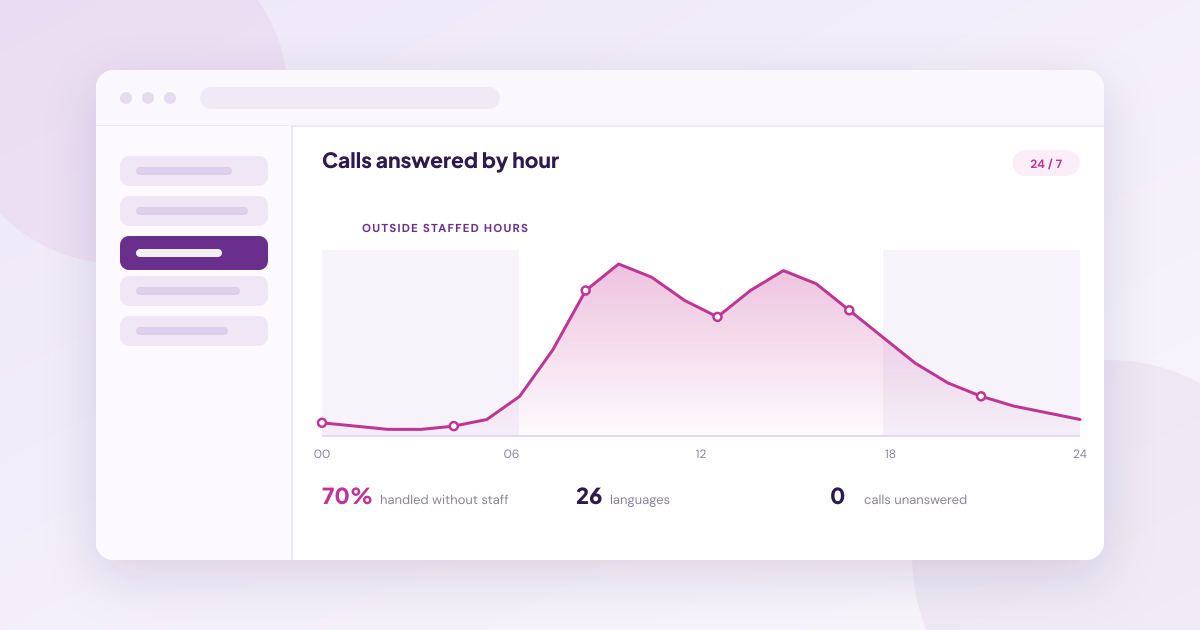
TL;DR
- An AI receptionist for a medical practice has to answer the call, complete the task, handle protected health information (PHI) properly and hand over cleanly, and those four jobs decide the comparison.
- Compliance is where the six separate most sharply. Medsender, Hello Patient, Prosper AI and Emitrr each state they provide a business associate agreement (BAA), while Smith.ai states plainly that it is not Health Insurance Portability and Accountability Act (HIPAA) compliant and cannot handle PHI.
- California's AB 3030 requires a verbal disclaimer and a route to a person on generative AI calls covering clinical information, and none of the six explains how it delivers that.
- A stated compliance position does not describe how a product behaves, so BAA terms, electronic health record (EHR) write-back and escalation rules still have to be verified before signing.
- Smith.ai alone publishes a rate, so five of six budgets begin with a sales conversation.
- Pick by the call you keep losing. Medsender leads for practices whose phone problem sits alongside a fax and referral problem, because all three land in one chart.
An AI receptionist answers a practice's inbound calls, completes routine requests such as booking and refill status, and passes anything else to staff. The 6 platforms below were compared from vendor product, pricing, security and FAQ pages in September 2026, not from hands-on testing.
What the Law Requires an AI Receptionist to Say
One criterion belongs in this comparison that vendors rarely raise. California's Assembly Bill 3030, effective 1 January 2025, requires physician practices using generative artificial intelligence (AI) for patient communications about clinical information to include a disclaimer that the message was AI-generated, plus instructions for reaching a human. For audio, the disclaimer must be given verbally at the start and the end of the interaction.
The statute exempts communications reviewed and approved by a licensed human provider, which makes escalation design a compliance question and not only a safety one. Rules differ by state, so treat this as a matter for your own counsel.
Checked against each vendor's published pages, no platform here states how it handles that verbal disclaimer. That is a gap across the category and not a mark against any one product, and it is worth raising on every demo call.
How These Six Were Compared
A receptionist in a medical practice has to do more than pick up. It has to finish the common requests, work inside the systems the practice already runs, handle protected health information properly, and hand over cleanly what it cannot resolve. Those four jobs set the criteria used here: stated call types, named EHR integrations, escalation behaviour, and published compliance. Price was recorded but not ranked, since only one vendor publishes one.
Medsender: Best for Practices Combining Phone, Fax and Referral Automation
Medsender's voice agent is named MAIRA and answers around the clock. Inbound, it answers questions on hours, directions and pricing, captures refill requests and handles appointment inquiries. Outbound, it places patient recapture and referral calls.
Key features:
- Syncs with the EHR so that, per the voice product page, "call details and patient messages land on the right chart automatically."
- Unresolved calls become a task or a transfer, with a summary saved in the voice inbox.
- Shares the document platform's 35 named EHR integrations, with 46 more on request; integration depth varies by system.
Pricing: Not published. Quote-based by call, fax and referral volume.
Pros: Keeping voice and document workflows on one platform can reduce reconciliation between separate systems, particularly for practices already using Medsender for fax and referrals. HIPAA compliant and System and Organization Controls (SOC) 2 Type II certified, with a signed BAA on every account from day one.
Cons: No published price at any tier. Human support runs 9AM to 5PM Eastern. Voice sits inside a wider automation platform, so a practice wanting only phone answering carries more than it needs.
Choose something else if you want a published rate before a sales call and the calls involved carry no PHI, where Smith.ai is the entry that gives you one; you need eligibility and balance resolved during the call, where Prosper AI goes furthest; or your requirement is patient access across text and chat as much as voice, where Hello Patient fits better.
Hello Patient: Best for Patient Access Across Voice, Text and Chat
Hello Patient's agent is named Mia and covers calls, texts and chat. The company states "100% answer rates across calls, texts, and chat" and positions the product around capturing demand a busy front desk drops.
Key features:
- Schedules appointments 24/7, verifies insurance and collects patient information before the visit.
- Reconnects with no-shows to rebook, so it covers outbound as well as inbound demand.
- Names AdvancedMD, athenahealth, eClinicalWorks, ModMed, NextGen, Veradigm, Ottehr, Pulse and Zenoti among its integrations.
Pricing: Not published. Demo request only.
Pros: Its FAQ states plainly that "Hello Patient is HIPAA compliant, SOC 2 Type 2 certified, and signs a BAA with every client", which is the clearest compliance statement in this set. Covering text and chat alongside voice suits practices whose patients have largely stopped calling.
Cons: No published price. A 100% answer rate describes pickup and not resolution, so establish separately what share of calls finish without staff involvement, and how the agent behaves when a caller goes off-script.
Prosper AI: Best for Eligibility, Balances and Payment on the Call
Prosper AI answers inbound calls, routes them, and reaches further into the revenue cycle than the others here. Eligibility is "verified via API before the patient hangs up", and where an API is unavailable it "Calls the Payer Directly".
Key features:
- Books, reschedules and cancels across all providers and locations, 24/7.
- Handles balance and statement questions on the call and takes payment by phone, text or email.
- States 80+ EHR integrations and names athenahealth, ModMed, Greenway, eClinicalWorks, Veradigm, Epic, Cerner, ImagineSoftware, Nextech and NextGen.
Pricing: Not published. Demo request only.
Pros: Eligibility and balance questions are among the longest calls a front desk takes, and resolving them live removes both the hold time and the callback. Its integrations page states PHI safeguards with Business Associate Agreements, independently audited SOC 2 controls and end-to-end encryption.
Cons: Pricing is quote-only. The 80+ figure is broader than the ten systems named publicly, so confirm your own EHR and the specific write-back workflows you need before assuming coverage.
Smith.ai: Best for Non-PHI Overflow Where a Published Rate Matters
Smith.ai offers AI-first, hybrid and human-first call handling, letting a practice choose how much live-agent involvement it wants. Its AI receptionist is priced separately from the human virtual receptionist service.
Key features:
- Three service modes, so the AI can escalate to a live North America-based agent at the practice's discretion.
- Published plans billed per call rather than per minute or per seat.
- Month-to-month with no long-term contract, and volume discounts as call counts rise.
Pricing:Published. A free tier covers 25 calls a month with $3.00 overage; Pro runs $150 for 75 calls, $270 for 150 and $500 for 300; Enterprise runs $500 for 300 calls and $800 for 500, with custom pricing above 1,000.
Pros: A published rate makes budgeting possible before a sales conversation, and the per-call rate falls from $2.00 to $1.50 as volume rises. The human fallback covers calls where tone matters more than throughput. Within the non-PHI boundary Smith.ai sets for itself, it is the only entry here a practice can price without contacting sales.
Cons: Smith.ai states on its legal page that it is “not HIPAA-compliant, so we cannot handle calls that involve protected health information (PHI)”, and advises practices needing HIPAA-compliant support to discuss requirements with its team first. That confines it to non-PHI work such as answering FAQs, taking messages and qualifying new-patient enquiries, and rules it out for any call touching a chart, a result or a clinical question. No EHR integrations are named.
Emitrr: Best for Small Practices Already Using It for Texting
Emitrr describes its agent as "An AI employee that works 24/7 for your business", handling booking, confirmation and scheduling alongside the patient texting the platform is better known for.
Key features:
- AI that books, confirms and schedules, running alongside two-way patient texting.
- Names Dentrix, Eaglesoft, Open Dental, athenahealth, Kareo, eClinicalWorks and Acuity.
- Aimed at independent medical and dental practices and not health systems.
Pricing: Not published on the product pages; demo request, no card required.
Pros: For a practice already running Emitrr for reminders and reviews, adding voice avoids a second vendor and a second inbox. Its AI answering page states HIPAA-compliant 24/7 coverage, and its security page states SOC 2 Type 2, so compliance covers the voice product and not only texting.
Cons: The BAA commitment appears in the general FAQ rather than on the product or security pages, so confirm it covers the voice product specifically. The named systems skew toward dental, so a medical specialty practice should confirm its own by name.
Simbo AI: Best for Buyers Who Want an Auditable Model
Simbo AI sells an AI phone copilot, a self-service answering product and an ambient scribe, and differentiates on how the model is built rather than on what it books.
Key features:
- SimboConnect for assisted phone handling and SimboDIYAS for self-service answering.
- The vendor states a "symbolic knowledge base which can be audited and modified by humans unlike opaque vector databases".
- Also sells an ambient scribe, so voice and documentation come from one vendor.
Pricing: Not published.
Pros: An auditable, human-editable knowledge base is a real answer to the governance question most vendors leave unaddressed, and it is easier to explain to a compliance officer than a confidence score.
Cons: The vendor's "hallucination free" description is a marketing claim and not an independently verified property, so treat it as something to test. The public site names no EHR integrations and states no HIPAA, BAA or SOC 2 position, and capabilities are described at a level of abstraction that makes call-type comparison difficult.
What the Comparison Actually Shows
Two differences matter more than the ordering. Pricing transparency varies widely: Smith.ai publishes a rate card for its AI receptionist, and the other five quote on request, so most budgets start with a sales conversation. That published rate carries a boundary, because Smith.ai also states it cannot handle PHI.
Compliance statements are more common in this set than a buyer might expect. Four platforms here state HIPAA, four state SOC 2 Type II, and four state that they provide a BAA. But a stated position does not tell you how the product behaves. Buyers still need to verify BAA terms, EHR write-back, escalation rules and exactly what happens when the agent cannot complete a call.
That makes vetting the question to settle first.
Which of the Six Fits Your Front Desk
Medsender, Hello Patient, Prosper AI, Smith.ai, Emitrr and Simbo AI are not competing on the same axis, so the useful question is not which ranks highest but which answers the call you keep losing.
- If the damage is calls nobody picks up after five, Hello Patient and Prosper AI both book around the clock. Prosper goes further, settling eligibility and balances while the patient is still on the line.
- If your phone traffic is inseparable from paperwork, the call chasing a referral that arrived by fax, Medsender is the only one here that answers both from the same chart.
- If you need a number before you need a demo, Smith.ai is the only one publishing a rate, but read its own compliance statement first, because it says it is not HIPAA-compliant and cannot handle PHI, which limits it to overflow and non-clinical enquiries rather than the practice's main line.
- If you already run Emitrr for texting, adding voice is a smaller decision than buying a platform.
- If your objection to AI on the phone is that nobody can tell you what it will say, Simbo AI's auditable, human-editable knowledge base is the one direct answer in this set.
Three things stood out reading these six side by side. Every vendor describes what its agent does when a call goes well, and almost none describe what it says when the call goes badly; Medsender and Smith.ai are the exceptions, and both are specific about it. The compliance pages are easier to find than the pricing pages, which is the reverse of most software categories and says something about who these companies expect to hear from. And all six claim to work around the clock, but that phrase covers everything from answering to booking to taking payment, so it settles nothing on its own.
Pick by the call you most regret losing this month. A practice that can name that call buys well; a practice shopping for the idea of a receptionist buys a demo it will not finish rolling out.
Medsender is where most practices should start. Its voice agent works from the same platform that already reads the faxes and referrals, so a call about a referral and the referral itself land on the same chart, and an unresolved call becomes a task or a transfer with a summary rather than a message somebody has to chase. The other five answer the phone well; only this one closes the loop the phone call is usually about.
FAQs
Which AI Receptionists Sign a BAA?
Medsender, Hello Patient, Prosper AI and Emitrr state so publicly. Hello Patient's FAQ states the company is HIPAA compliant, SOC 2 Type 2 certified, and signs a BAA with every client. Emitrr's FAQ states that it is HIPAA-compliant and provides a BAA. Simbo AI makes no BAA statement on the pages reviewed. Smith.ai goes further and states it is not HIPAA-compliant and cannot take calls involving PHI.
What Does Smith.ai's AI Receptionist Cost?
A free tier covers 25 calls a month with $3.00 overage, Pro runs $150 for 75 calls, $270 for 150 and $500 for 300, and Enterprise runs $500 for 300 and $800 for 500. These differ from Smith.ai's human virtual receptionist plans, which start at $300 for 30 calls.
Can Any of These Resolve Insurance Questions on the Call?
Prosper AI goes furthest. It states eligibility is verified by application programming interface before the patient hangs up, and that it phones the payer directly when an interface is unavailable. It also handles balance and statement questions and takes payment by phone, text or email during the call.
Which of These Name the EHRs They Connect To?
Four do. Prosper AI claims 80-plus and names ten, including Epic, Cerner and athenahealth. Medsender carries its document platform's 35 named systems with 46 more on request. Hello Patient names nine. Emitrr names seven, weighted toward dental. Smith.ai and Simbo AI name none.
Does an AI Receptionist Need to Announce Itself?
In California, AB 3030 requires a verbal disclaimer at the start and end of a generative AI call covering clinical information, plus a route to a human. Communications a licensed provider reviews are exempt. None of these six explains how it delivers that disclaimer, which makes it a question for every demo.
What Happens to a Call the AI Cannot Finish?
Medsender turns it into a task or a transfer with a summary saved to the voice inbox. Smith.ai escalates to a live North America-based agent at the practice's discretion. The others describe handoff less precisely, so establish who receives the call and what context travels with it.

Zain Qayyum
Chief Executive Officer
Zain Qayyum is co-founder and co-CEO of Medsender. He started the company in 2015 and has spent the decade since on the front-office work that decides whether a referred patient is ever seen: inbound fax, referral backlogs, and phones nobody has time to answer. He argues that healthcare's hardest problems are operational rather than technical, and speaks and writes on where AI genuinely helps a practice and where it overpromises. He is based in New York.
Related Signals
7 Best Referral Management Software Platforms for Specialty Practices
Zain QayyumWed, Sep 23, 2026
6 Best AI Automation Software Platforms for Medical Practice Administration (2026)
Zain QayyumFri, Sep 11, 2026
6 Best Patient Recall and No-Show Software Platforms for Medical Practices
Zain QayyumTue, Sep 1, 2026