Best Medical Document Processing and Data Extraction Platforms for Practices (2026)
 Zain QayyumLast Updated: Oct 27, 2026
TL;DR
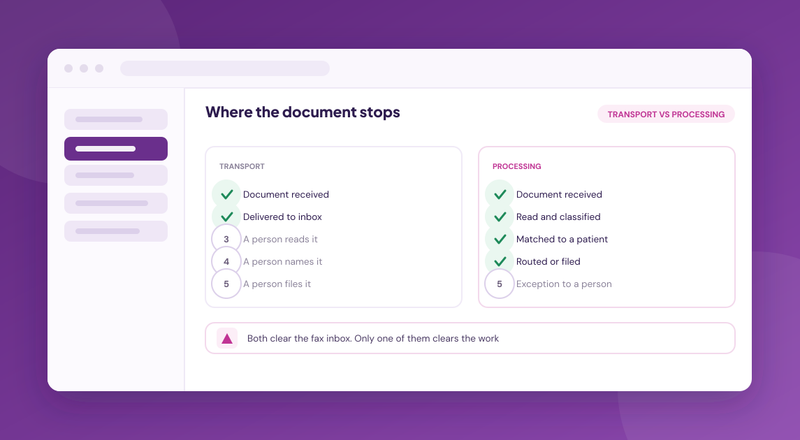
- Document processing is not faxing. A fax service moves a page. A processing platform reads it, decides what it is, pulls fields off it and files it.
- The capability that separates these platforms is what happens after extraction: whether structured data reaches the chart, and under what conditions.
- Chart write-back is conditional on every platform here, whatever the marketing says. It depends on your specific EHR and your specific interface.
- Pricing in this category is mostly quote-based. Where it is published it is either per clinician or per page, and those two models reward very different document volumes.
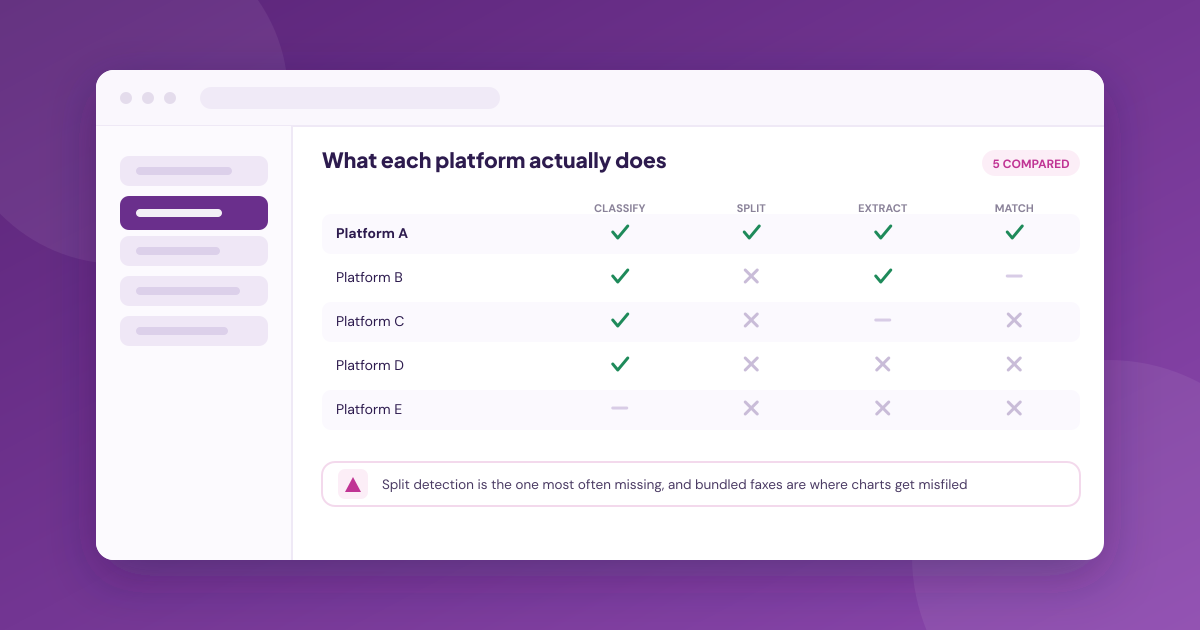
- Split detection matters more than practices expect. A bundled fax containing four patients' documents is the most common cause of a misfiled chart.
- Ask about confidence thresholds and who works the exception queue. A platform with no exception path is not more accurate, it is less honest.
What Document Processing Has to Do Beyond Reading Text
Optical character recognition (OCR) is the easy part and it has been commodity for years. The work that matters in a practice happens after the text exists.
Five things a platform has to do, and they are separable. Vendors are frequently strong at some and silent on others.
Classification. Deciding what the document is. A referral, a lab result, a prior authorization request, an insurance card, junk. Everything downstream depends on getting this right, and it is where specialty-specific document types cause the most trouble.
Split detection. Recognizing that one inbound transmission contains several documents, often for several patients. A twelve-page fax that is actually four referrals has to become four records, not one. This is the single most consequential capability in the list and the one most likely to be absent.
Extraction. Lifting specific fields off the page. Patient name, date of birth, referring provider, insurance, diagnosis codes. The useful question is not whether it extracts but whether you can configure which fields, per document type.
Patient matching. Connecting the extracted identity to the right chart. Same name and same date of birth is the hard case, and so is the patient who does not exist yet.
Filing. Getting the result into the EHR as something structured rather than as a PDF attachment. This is where conditionality lives, and it is covered in its own section below.
A platform that does the first three and hands you a PDF has moved the data entry rather than removed it.
How These Platforms Were Chosen
Five platforms, each assessed only against what it publishes on its own site, read on October 26, 2026.
Inclusion required three things: the platform processes inbound clinical documents rather than only transmitting them, it describes extraction or classification as a product capability rather than a roadmap item, and it publishes enough detail to compare.
Two candidates were excluded for failing the third test. Upland InterFax's healthcare extraction claims appear in a datasheet that could not be retrieved directly, and Relatient's site returned an access error on two attempts. Neither exclusion is a judgment about the products.
Where a field below says "Not stated", it means the vendor does not publish it, not that the capability is absent. In this category the unpublished fields are as informative as the published ones.
Document Processing Platforms at a Glance
| Platform | Best for | Extraction detail published | Split detection | Named EHR integrations | Compliance stated | Pricing |
|---|---|---|---|---|---|---|
| Medsender | Practices wanting classification, matching and filing in one path | Fields named: referrals, results, demographics, insurance | Merges duplicates; split not described | 6 named: ModMed EMA, Epic, athenaOne, Elation, AdvancedMD, Tebra | HIPAA, SOC 2 Type II, BAA at no cost, Google Cloud US servers | Not published |
| Documo | Configurable per document type, with confidence thresholds | Configurable fields per document type | Yes, "Automatic Split Detection" | 7 named: PointClickCare, ModMed, NextGen, athenahealth, eClinicalWorks, Tellescope, Jane | HIPAA, SOC 2 Type II, HITRUST e1 on GCP | Not published |
| WestFax Comprehend | Practices that want fax and extraction from one vendor, priced per page | "Structured, actionable data" | Not stated | 5 named: Epic, NextGen, PointClickCare, MEDITECH, KanTime | HIPAA with executed BAAs, SOC 2 Type II audited | Published, from $14.99/mo |
| Insight Health | Small practices wanting a published per-clinician price | Fax AI Agent, mechanics not described | Not stated | athenaOne named | HIPAA, SOC 2 Type II | Published, from $0 |
| Luma Health | Groups already buying patient access, wanting fax inside it | Fax processing inside a wider platform | Not stated | 10 named, including Epic, athenahealth, Oracle Health, MEDITECH, ModMed | HITRUST certified, ISO 27001, TX-RAMP | Not published |
The Platforms, One Section Each
Medsender: Best for Classification, Matching and Filing in One Path
Medsender describes a single pipeline from inbound document to filed record. Its page states that the AI "recognizes the document, gives it a clear title, a category, and tags". On extraction it says "AI vision turns any document into clean text", and that the system "lifts the specific fields off the page, structured and ready to file". Referrals, results, demographics and insurance are named as the field groups.
Patient matching is described as working "across different layouts and senders", which is the part that matters when the same referring office sends three different form designs.
Key features
- Classification by type and priority, with routing to a matching inbox.
- Field extraction named for referrals, results, demographics and insurance.
- Patient matching across varying layouts and senders.
- Duplicate merging as part of referral handling.
- Chart creation and write-back where the EHR supports them. This is the conditional discussed below and it applies to every platform in this list.
- Six named EHR integrations, with additional integrations supported on request.
Pricing Not published. Quote-based.
Pros The strongest published detail on matching, which is the capability most likely to cause a misfiled chart. Compliance posture is the most completely documented of the five. HIPAA, SOC 2 Type II described as independently audited, and a business associate agreement (BAA) included at no additional cost. Hosting is Google Cloud on US-based servers, with role-based permissions and an audit trail that records every automated action.
Cons No published pricing, so comparison requires a quote. Split detection is not described, and bundled multi-patient faxes are common enough that it is worth asking about directly. No accuracy figure is published on the product page.
Documo: Best for Configurable Extraction With Confidence Thresholds
Documo's intelligent document processing is the most configurable of the five as published. It names the pipeline explicitly: OCR including poor-quality scans and handwritten forms, automatic split detection, configurable field extraction per document type, and filing.
It is also the only platform here that publishes automatic split detection as a named capability, which given the failure mode discussed above is a meaningful differentiator.
Key features
- OCR covering faxes, scans and handwritten forms.
- "Automatic Split Detection" to separate bundled documents into individual records.
- Configurable fields per document type, with confidence thresholds the practice sets.
- Filing into the EHR. The page states "Data is written directly into the correct record in your EHR."
- Seven named integrations including ModMed, NextGen, athenahealth, eClinicalWorks and PointClickCare.
Pricing Not published. A free trial and an ROI calculator are offered.
Pros Confidence thresholds set by the practice rather than the vendor is the right default, and it is rarely published. Split detection is named rather than implied. Compliance is stated as HIPAA and SOC 2 Type II, with HITRUST e1 for its Google Cloud infrastructure.
Cons No BAA statement on the security page, which for a healthcare buyer is the first thing to confirm. No data residency, retention or export detail published.
WestFax Comprehend: Best for Fax and Extraction From One Vendor at a Published Price
WestFax is a cloud fax provider first, with Comprehend as an artificial intelligence (AI) layer on top. The page describes Comprehend as turning faxes into "structured, actionable data", extracting key details from inbound faxes and sending them into the customer's systems.
It is one of only two platforms here with published pricing, and the only one priced per page, which makes it directly comparable to a practice's existing fax spend.
Key features
- Cloud fax with a REST application programming interface (API) and webhooks.
- Comprehend extraction available as an add-on on Team plans and included in Enterprise.
- Five named EHR integrations including Epic, MEDITECH and PointClickCare.
- BAAs described as executed as standard for healthcare plans.
Pricing Published. Solo at $14.99 a month for 500 pages and one user, with three cents per extra page. Team at $39.95 a month for 1,500 pages and five users, with overage from two and a half to three cents a page. Enterprise is custom.
Pros The clearest pricing in the category and the easiest to compare against an existing fax bill. Compliance language is specific: "Fully HIPAA-compliant with executed BAAs", with SOC 2 described as Type II audited.
Cons Comprehend is an add-on rather than the core product, and the extraction mechanics are not described in the detail Documo or Medsender publish. Split detection is not stated. The per-page model is simple to shop and easy to optimize wrongly, since the cost driver becomes page count rather than work removed.
Insight Health: Best for a Small Practice Wanting a Published Per-Clinician Price
Insight Health sells a set of AI agents across clinical workflows, of which a Fax AI Agent is one. The others include intake, follow-up, referral management, phone triage and an AI front desk.
It is the only platform in this list with a published free tier, and the only one priced per clinician, which suits a small practice that wants to start without a procurement process.
Key features
- Fax AI Agent within a broader set of workflow agents.
- Described as turning faxed referrals, prior authorization requests and medical documents into coordinated EHR workflows.
- athenaOne named as an integration.
- Compliance stated as HIPAA compliant and SOC 2 Type II certified.
Pricing Published. Free at $0, Pro at $39.99 per clinician, Team at $79.99 per clinician, and a custom Enterprise tier.
Pros The lowest barrier to trying document automation in this list. Per-clinician pricing is predictable for a small practice, and a free tier allows evaluation without a quote.
Cons The extraction mechanics are not described. The page says the Fax AI Agent exists but not how classification, matching or filing work, which is exactly the detail this category should be compared on. One named EHR integration, and that one appears in a testimonial rather than an integration list. Per-clinician pricing becomes unpredictable at a practice that hires.
Luma Health: Best for Groups Already Buying Patient Access
Luma Health is a patient access platform with fax processing as one component, alongside scheduling, referrals, waitlists, intake, eligibility and payments. It states that it writes back to the EHR.
This is the only platform here where document processing is a feature of something larger, which is both the argument for it and against it.
Key features
- Fax processing inside an access platform covering acquisition, access, outreach and revenue cycle.
- Ten named EHR integrations, the longest named list of the five, including Epic, athenahealth, Oracle Health, MEDITECH, NextGen, Nextech, Greenway, PCC and ModMed.
- Security credentials published as HITRUST certified, ISO 27001 and TX-RAMP.
Pricing Not published.
Pros The broadest named EHR coverage of the five and the strongest published security certification set. For a group already evaluating patient access, the fax component arrives without a second vendor.
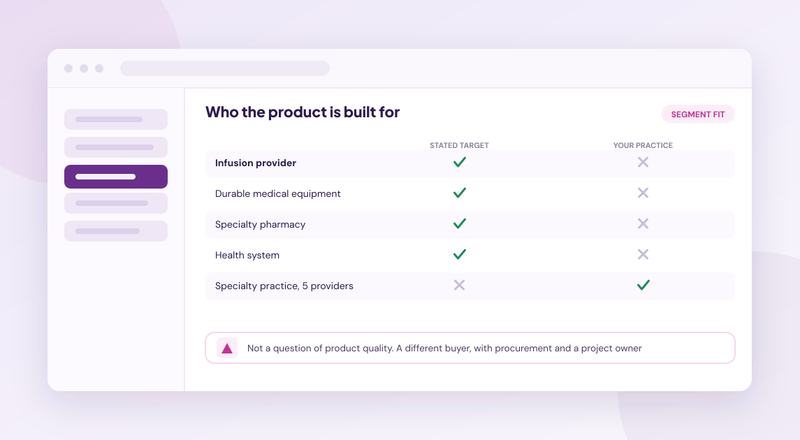
Cons The fax and document processing capability is not described in any detail, so it cannot be compared on classification, split detection or extraction. It is positioned at health systems rather than independent practices. HIPAA is not stated in text on the page, and neither is a BAA, which are the two things a healthcare buyer should confirm first.
Where Extraction Stops and Staff Review Starts
No platform in this category files everything unattended, and one claiming to would be making a claim worth distrusting.
Three questions determine whether the oversight is real.
What happens below the confidence threshold. Documo publishes that thresholds are set by the practice. The others do not state who sets them. A threshold set by the vendor at a level that minimizes queue volume is a different product from one set by you at a level that minimizes misfiling.
Where review happens, before or after filing. Before is materially safer, because some EHRs will not fully remove a document once filed. We have written about where that review should sit in more depth separately.
Who works the exception queue. A named person with allocated hours, or automation drifts into being unsupervised by accident. None of the five publish anything useful about exception handling, which makes it a demo question rather than a comparison field.
One thing none of them publish, and it is worth asking every vendor directly: whether your practice's documents are used to train or tune models, in any form, and whether that use stays inside your instance. Several vendors in adjacent categories now state a position on this. None of the five here does on the pages read.
A Note on Chart Creation and Write-Back
Every platform in this list describes filing to the chart, and some describe it flatly. Treat all of it as conditional.
Chart creation and write-back depend on what your specific EHR exposes and on which interface you are getting. An EHR that accepts a document but not structured fields gives you filing without extraction value. An EHR with no write-back interface gives you a very good inbox.
That is not a criticism of any vendor. It is the structure of the problem, and it is why the integration question has to be answered for your EHR and your interface rather than in general. A vendor list of named integrations tells you a connection exists. It does not tell you what passes through it.
Establish three things before signing, for your own system. Whether structured fields can be written or only documents. Whether a chart can be created when the patient does not exist yet. And what happens when the interface is unavailable.
Deciding Which Platform Fits Your Document Mix
Start with your documents rather than with the vendors.
If bundled multi-patient faxes are common, split detection is the deciding capability and Documo is the only one publishing it as a named feature. Ask the others to demonstrate it on a real bundled document rather than describing it.
If misfiled charts are your actual pain, patient matching is the axis, and Medsender publishes the most detail on matching across layouts and senders.
If you want to compare against your current fax bill, WestFax is the only per-page option with published rates.
If you are a small practice without procurement patience, Insight Health is the only one you can start on today at a published price, accepting that the extraction detail is thin.
If you are a group already evaluating patient access, Luma Health avoids a second vendor, accepting that the document capability is undescribed.
Whichever direction, three questions decide it in a demo, and none of them are answerable from a website. Show me a bundled fax with four patients in it. Show me two patients with the same name and date of birth. Show me what happens when the EHR interface is down.
FAQs
What Is the Difference Between a Fax Service and a Document Processing Platform?
A fax service moves a page. A processing platform reads it, decides what it is, lifts fields off it and files it. The useful test is whether structured data reaches the chart or whether you receive a readable PDF and still type the demographics in by hand.
Why Does Split Detection Matter So Much?
Because one inbound transmission frequently contains several documents for several patients. A twelve-page fax that is actually four referrals has to become four records, and a platform that treats the transmission as the unit produces one. It is the most common cause of a misfiled chart and the capability most likely to be absent.
Can These Platforms Create a Chart for a Patient Who Does Not Exist Yet?
Where the EHR supports chart creation and write-back, yes. That condition applies to every platform in this category, not to one of them. An EHR that accepts documents but not structured fields gives you filing without the extraction value, so the question has to be answered for your specific system and interface.
Do Any of Them Publish Pricing?
Pricing in this category is mostly quote-based. Where it is published it is either per clinician or per page, and those two models reward very different document volumes. A per-page model is simple to compare against an existing fax bill and easy to optimize for the wrong thing, since the cost driver becomes page count rather than work removed.
What Should We Ask That the Websites Do Not Answer?
Three things, and none are answerable from a vendor page. Show me a bundled fax containing four patients. Show me two patients with the same name and date of birth. Show me what happens when the EHR interface is unavailable. Also ask directly whether your documents are used to train or tune models, because none of these platforms publishes a position on it.

Zain Qayyum
Co-Founder and Co-CEO
Zain Qayyum is co-founder and co-CEO of Medsender. His work centres on the front-office problems that decide whether a referred patient is ever seen: inbound fax, referral backlogs, and phones nobody has time to answer. He argues that healthcare's hardest problems are operational rather than technical, and speaks and writes on where AI genuinely helps a practice and where it overpromises. He is based in New York.
Related Signals