Best Assort Health Alternatives in 2026
 Zain QayyumLast Updated: Nov 13, 2026
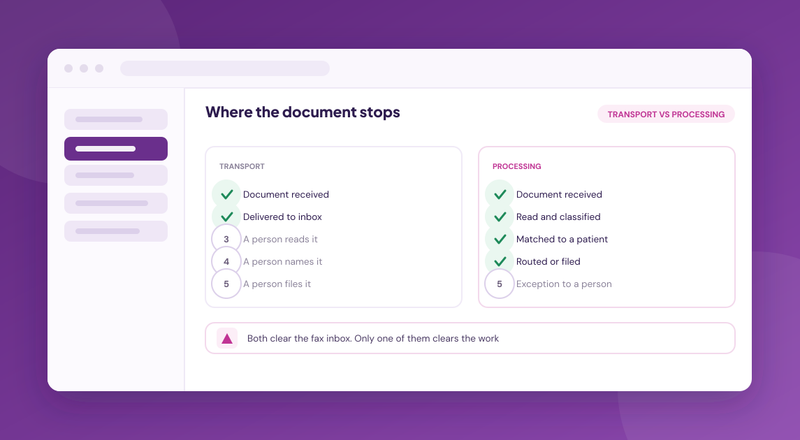
Assort Health is a voice product that added referral automation in August 2026. Before comparing it against anything, work out whether your bottleneck is the phone or the fax inbox, because that answer changes the entire shortlist and most comparison pages never ask it.
A practice whose referral coordinator is three days behind on paperwork is not short of phone coverage. It is short of document processing, which is a different category.
TL;DR
Assort Health leads with an artificial intelligence (AI) voice agent and added referral automation afterwards.
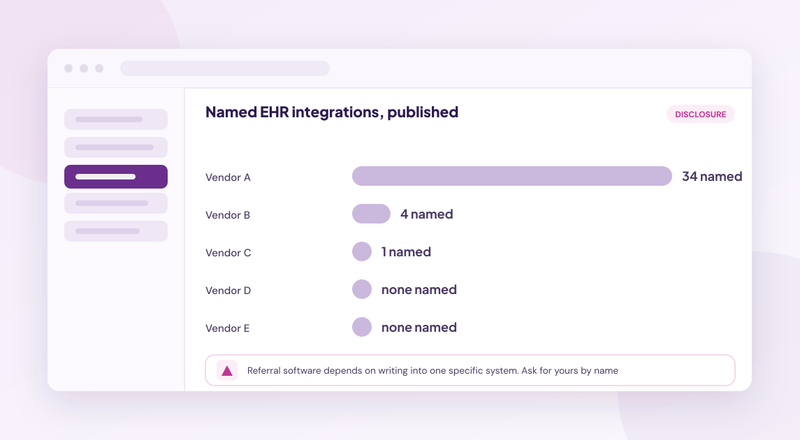
It publishes no pricing, no human review step, and names only athenahealth among a claimed fifteen or more platforms.
Count unanswered calls and unworked referrals separately before shortlisting anything.
Two of the six vendors compared here publish any pricing at all.
One publishes what happens when its software cannot resolve a request.
Everything below was checked against each vendor's own site on 12 November 2026.
What Assort Health Does Well
Assort is a credible product and this page loses its reader if it pretends otherwise. On voice it is deeper than anything else compared here.
Voice Is the Core, and It Is Thorough
Scheduling around the clock, outbound outreach, intake, payment resolution, medication refills, lab requests, waitlist management and two-way texting all run through the voice agent. The company describes a platform trained on more than three hundred million interactions, which is a genuine scale claim, and requests are routed to the right provider, department or next step rather than simply logged.
The athenahealth Integration
Assort reserves its boldest integration claim for athenahealth. For an athenahealth practice whose problem genuinely is the phone, that combination is difficult to beat, and nothing below should be read as suggesting otherwise.
Why Practices Compare It Against Something Else
Two reasons come up, and the first is about sequencing rather than quality.
Referrals Were Added, Not Founded On
Referral automation arrived in August 2026, after the voice product. That is not a criticism of the roadmap, but it is a fair question about depth. Ask what happens to a multi-page referral packet containing a handwritten insurance card, and ask how many practices run that capability today.
There Is Little Published to Compare On
No pricing, no human review step, no uptime figure, and one named integration out of a claimed fifteen or more. Four of the six vendors here publish nothing on price either, so that part is a category habit. The single named integration is the more unusual gap.
The Alternatives Compared
Six options, weighted towards practices whose problem turns out to be paperwork rather than phones. Silence on a criterion means the vendor does not address it publicly, not that the capability is missing.
Medsender: Best for Practices Whose Backlog Is Documents and Referrals
Medsender starts from the paperwork rather than the phone. It reads a fax batch in under five seconds, applies optical character recognition to typed and handwritten pages, and distinguishes a referral from a result from an authorization across multi-page packets. Anything unusual is flagged as an exception for the referral coordinator, and judgment calls stay with your team, which is the clearest published statement of human review among the six. Pricing is published per unit at eight cents per fax page at low volume sliding to 5.6 cents, and $1.20 per referral sliding to $1.00. It names thirty-four electronic health record (EHR) integrations as available with forty-seven more on request, holds System and Organization Controls (SOC) 2 Type II, and includes a business associate agreement (BAA) free with every account. Results post to the chart if your EHR supports chart creation and write-back. It also runs AI call handling, so it covers both axes, but its voice product is newer and less proven than Assort's and should not be presented as equivalent. Other limits: no public status page, no published service level agreement, and a 99% accuracy figure covering fax extraction only.
Linear Health: Best for athenahealth Practices Wanting Published Economics
Linear Health publishes its commercial terms and its escalation model together, which no other vendor here does. It starts from $2,000 a month as a flat fee per workflow sized to volume, and states that nothing is charged monthly until the workflow is live and processing real work. No other vendor in this comparison publishes a comparable commitment. Linear Health converts referral faxes into structured records, runs eligibility checks, contacts patients and books appointments, and offers voice handling in English and Spanish alongside care gap closure as separate modules. Its stated model is routine work automated and exceptions escalated, at roughly eighty per cent automated with the team in the loop on the remainder, though it never defines what actually triggers an escalation. It offers native write-back on athenahealth plus established integrations with NextGen, eClinicalWorks and Greenway Health, holds SOC 2 Type 2, and executes a BAA with every customer. Four named integrations is the main constraint.
Valerie Health: Best for a Direct Like-for-Like on Referrals and Documents
Valerie Health sells Referral Automation, Fax and Document Automation, Automated Scheduling and Growth Analytics, named exactly that way. For a practice wanting a second quote on the document side of the problem, it is the obvious one to get, and it states SOC 2 Type II, which several vendors here do not. Customers get control to personalise patient engagement and to build custom workflows. Two gaps cap an outside evaluation. Valerie Health names no EHR or practice management integrations at all, saying only that it works with your systems and many more, which matters enormously for software whose value depends on writing into one specific system. It also publishes no pricing. Valerie Health describes itself as certified under the Health Insurance Portability and Accountability Act (HIPAA); HIPAA operates no certification scheme, so that claim is worth querying rather than accepting at face value.
Tennr: Best for Infusion, Durable Medical Equipment and Health Systems
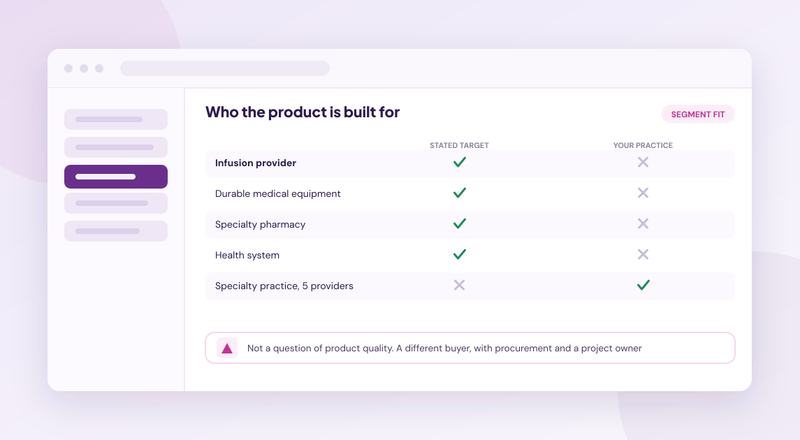
Tennr states plainly which organisations it is for: fertility clinics, hospitals and health systems, infusion providers, manufacturers and durable medical equipment (DME) suppliers, physician groups and specialty pharmacies. Its customer logos match, including Palmetto Infusion, KabaFusion, TwelveStone Health Partners and Rothman Orthopaedics. A $101M Series C and more than two hundred stated providers mean durability is not a concern, and for an organisation with its own technology function that profile is reassuring. The difficulty for a smaller practice is disclosure. There is no pricing, no stated review posture, no named EHR integrations and no security or compliance claims on its public pages. A practice with four people in the front office and no project owner is buying a different shape of product entirely, so treat this as a segment mismatch rather than a weak competitor. If you are evaluating it regardless, ask about implementation scope and who supplies the hours before anything else.
Updox: Best for Breadth Across Patient Communications
Updox is a unified communications and charge capture platform rather than a voice or referral product. Secure messaging, telehealth, patient portal, appointment reminders, forms, broadcast messaging, secure text and payments sit in one place, which is the whole argument for a practice that would rather consolidate vendors than add a specialist tool. It holds Electronic Healthcare Network Accreditation Commission (EHNAC) DirectTrust accreditation for secure messaging, and it publishes a public status page at partnerstatus.updox.com, which no other vendor in this comparison does. Against that, Updox publishes no pricing, names no specific EHR integrations beyond stating that it works with most systems, and makes no SOC 2 claim publicly. For anyone comparing against Assort on call handling specifically, Updox is not a like-for-like and should not be shortlisted as one. Its reminders and broadcast messaging overlap patient outreach rather than inbound call answering, which is a different job performed at a different moment in the patient's week.
Brevium: Best for Reactivating Patients Who Stopped Coming Back
Brevium belongs to a neighbouring category that practices often weigh at the same moment. It identifies overdue patients and missed care, runs personalised outreach, surfaces in-visit provider alerts, analyses provider schedules for capacity, and attributes resulting appointments for return-on-investment reporting. Its specialty coverage is well targeted, naming Nextech, athenahealth, ModMed and eClinicalWorks, with more than fifty systems claimed through its Stitch integration layer. If your empty appointment slots trace back to patients who drifted away rather than to calls nobody answered, this is the right category. On compliance, Brevium describes a BAA-backed, HITRUST-aligned environment, and Brevium's HITRUST-aligned is not the same as HITRUST certified. SOC 2 is not mentioned publicly, and no pricing is published anywhere on its site. Practices carrying both an unanswered-call problem and a recall gap usually have to sequence the two purchases, and counting each leak separately settles the order faster than comparing feature lists does.
How to Decide, Starting With the Bottleneck
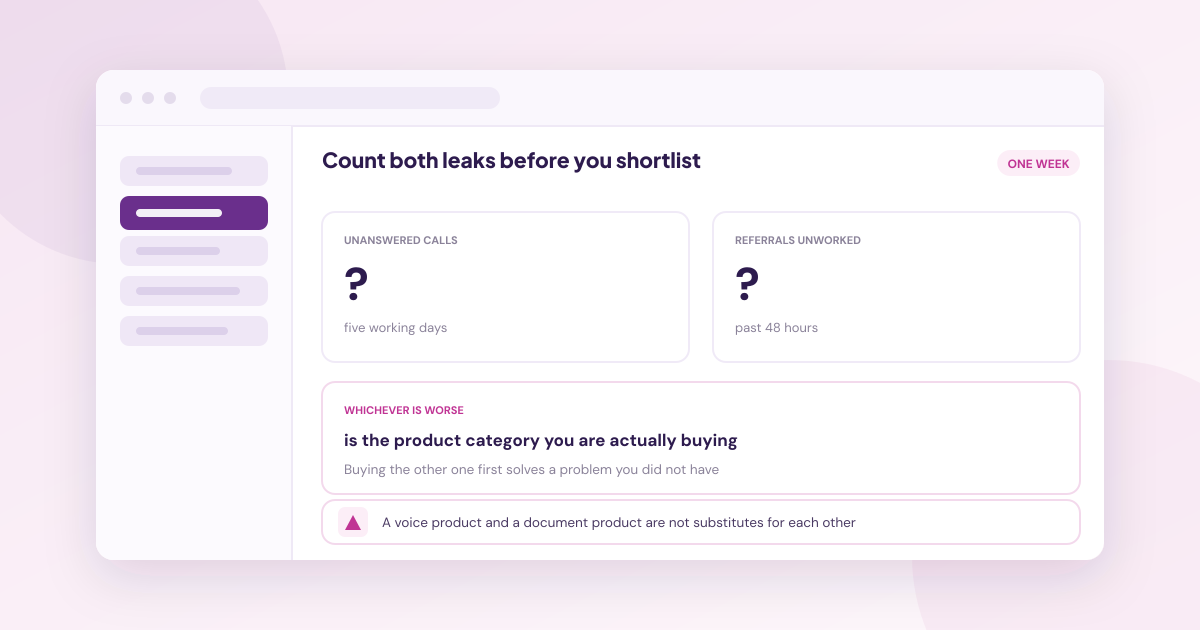
Diagnose before you shortlist, and it takes a week rather than a quarter. Count unanswered calls across five working days. Separately, count referrals sitting unworked for more than forty-eight hours. Whichever number is worse is the product category you are actually buying, and buying the other one first solves a problem you did not have.
Then put four questions to whoever survives. What does this cost at our monthly call and referral volume, in writing. What happens to a referral the software cannot resolve, and who owns it by name. Which of our systems do you name publicly, and what data does the integration return. How long has the capability we care about actually shipped, and how many practices run it. Our comparison ofAI receptionists for medical practicescovers the voice side properly,what an AI receptionist can and cannot dosets expectations before a demo, andreferral management software for specialty practicescovers the document side.
FAQs
Common questions from practices evaluating Assort Health against other options.
What Does Assort Health Cost?
No figure is published on its site. Budgeting requires a sales conversation first. Ask for a quote at your actual monthly call volume rather than a list price, and ask what the rate becomes at twice that volume, because growth is what moves a practice into a different pricing band.
Does Assort Health Handle Referrals as Well as Calls?
Test it rather than taking a position on it. Send a real packet through a trial, including a scanned insurance card and a page that is upside down, then check what landed in the chart and what reached a person. That single exercise answers more than any feature comparison will.
Which EHRs Does Assort Health Integrate With?
Only athenahealth is named publicly, out of a claimed fifteen or more supported platforms. Ask for your own system by name, what data the integration returns, and a reference customer running it. Unnamed integrations are common across this category but harder to verify before signing.
What Is a Good Alternative for a Document Backlog?
Look for vendors publishing per-unit rates and named EHR integrations, since those two signals correlate with document depth. A voice-first product solves the phone and leaves the paperwork, so a practice with a referral backlog is usually shopping a different category entirely.
Should a Practice Buy Phone Automation or Document Automation First?
Count both leaks over one week before deciding. Unanswered calls and referrals unworked past forty-eight hours are different failures with different fixes. Buy for the larger number first. The second problem will still be there afterwards and will be easier to scope once the first is handled.
Which of These Vendors Publish a Human Review Step?
Two of the six compared here describe one. Medsender states that unusual items are flagged as exceptions for the referral coordinator with judgment calls staying with the team. Linear Health states that routine work is automated and exceptions escalated. The remaining four publish nothing on review behaviour.

Zain Qayyum
Co-Founder and Co-CEO
Zain Qayyum is co-founder and co-CEO of Medsender. His work centres on the front-office problems that decide whether a referred patient is ever seen: inbound fax, referral backlogs, and phones nobody has time to answer. He argues that healthcare's hardest problems are operational rather than technical, and speaks and writes on where AI genuinely helps a practice and where it overpromises. He is based in New York.
Related Signals