
AI Fax Automation: How Practices Handle Documents, Duplicates and Downtime
 Zain QayyumLast Updated: Sep 29, 2026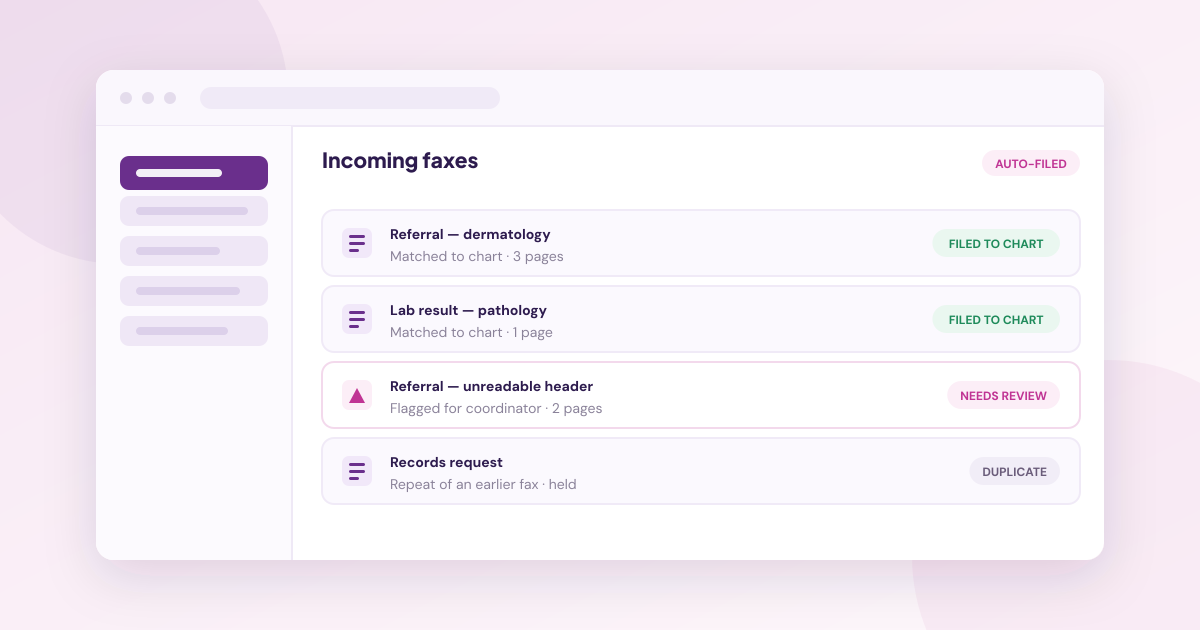
TL;DR
- Artificial intelligence (AI) fax automation replaces the reading and filing, not just the fax line.
- Naming conventions should be yours to set, because everything you search for later depends on them.
- Once volume rises, duplicate prevention matters more than extraction accuracy, because a duplicate costs more to remove than the original cost to file.
- A fax platform independent of the electronic health record (EHR) keeps receiving when the EHR is unavailable.
- Junk and marketing faxes should be filtered before they reach a clinical work queue.
- You can keep your existing fax number, and the vendor should handle the transfer.
AI fax automation reads an incoming fax, works out which patient it belongs to and what kind of document it is, then names and routes it. The questions that decide a purchase are usually narrower than that: who controls naming, what stops duplicates, and what happens when the EHR is unavailable.
Can We Control How Incoming Patient Documents Are Named?
You should be able to, and it matters more than it first appears. A document nobody can find six months later was not really filed, and the convention that decides findability is the naming rule applied at intake.
Ask whether naming is configurable per document type rather than fixed across the practice. A referral, a lab result and a records request are searched for differently, and a single template applied to all three makes two of them harder to retrieve. Confirm that changing a rule is a setting rather than a support ticket.
How Does Fax Software Tell a Patient Document From Junk?
By classifying the document before routing it, not after. Marketing faxes, supplier notices and misdirected pages are identified at intake and kept out of clinical queues, so staff only open what needs action.
The question worth asking is what happens when the classifier is wrong. A misfiled junk fax is an annoyance; a clinical document classified as junk is a patient safety issue. Confirm that corrections are possible and that the system remembers them and not repeating the same misclassification next week.
How Do We Stop Duplicate Documents Reaching the Patient Chart?
Most duplicates do not come from the software. They come from referring practices resending the same document because they heard nothing back and assumed the first attempt failed.
That makes acknowledgement the control worth prioritising. A referring office that can see the referral arrived stops resending it. Medsender addresses this directly through a referral provider portal that lets the referring practice see the outcome.
Ask any vendor two things: how a repeat document is detected, and whether staff can reject or merge it before it files, not after. Cleaning a duplicate out of a chart is considerably harder than stopping it at the door.
If Our EHR Goes Down, Does Our Fax Line Go Down Too?
Not if the fax platform is independent of the EHR. Documents continue arriving and queue in the platform, then file once the EHR is available again, which means an outage delays filing rather than losing documents.
This independence is one of the practical arguments for a separate fax platform over a fax module inside the EHR. Confirm with any vendor what happens to documents in flight during an outage, and whether staff can still view and action them while the EHR is down.
Can Automation Work Without Using the EHR Task List?
Yes, and there are two models worth distinguishing. Some platforms push work into the EHR task list so staff never leave the system of record. Others hold work in their own queue and write only the finished result back.
Neither is automatically better. The right answer depends on where your staff already spend the day. A team living inside the EHR will resist a second queue; a team already working from a shared inbox may find the EHR task list slower. Ask which model the vendor uses before assuming it matches your workflow.
Can We Keep Our Fax Number When We Switch Vendors?
Yes. Referring providers have your number stored in their systems and will keep using it regardless of what you tell them, so porting instead of replacing is the only switch that stays invisible.
Medsender states plainly: "We port your existing number so nothing changes on your end," and handles the transfer itself. Porting is usually the longest step in a switch, so establish early who manages it and how long it is expected to take.
Can Software Read Handwritten Medical Faxes?
Handwriting quality varies enormously, so a headline accuracy percentage tells you less than the failure mode does. The question that matters is what happens to a page the system cannot read confidently.
A page held for a person to read, with the original attached, is safe. A page filed with missing fields, or dropped silently, is not. Confirm that the original document remains viewable alongside whatever was extracted, so a member of staff can check a name or a date without leaving the screen.
What AI Fax Automation Does Not Remove
Automation changes who does the routine work, not whether anyone owns the queue. Somebody still reviews exceptions, corrects a misread name and answers the referring office that calls to chase.
Medsender describes this division explicitly: "Anything unusual is flagged for your referral coordinator. Judgment calls stay with your team." A vendor promising no review at all is describing a risk, not a feature.
Deciding Whether Your Fax Problem Is the Right One to Automate
The questions above have technical answers, but the decision underneath them is not technical. It is whether inbound documents are costing you enough hours to be worth changing how the front office works.
- Automation pays where the same document type arrives repeatedly and gets handled the same way each time. Referrals, records requests and lab results qualify; a varied trickle usually does not.
- It pays where a person is retyping information that already exists on the page, since that is the step software removes rather than relocates.
- It does not pay where the real cost is chasing, phoning the referring office, waiting on a callback, clarifying an order. That work stays whatever you buy.
Two things are worth knowing before a demo. Vendors demonstrate on clean documents, and the documents that consume your staff's day are the ambiguous ones, so ask to see a failure and how it surfaces. And duplicate handling, number porting and EHR downtime behaviour are rarely on the sales deck despite being the three things that go wrong first, which is why they are worth raising unprompted.
Count how many documents you receive in a week and how many are the same three types. If that share is high, automation will return real hours. If it is not, the honest answer is that a cheaper fax line will serve you better than an intelligent one.
FAQs
Can We Control How Incoming Documents Are Named?
You should be able to, and per document type rather than one rule across the practice. Naming determines whether anyone can find the document six months later, so the convention needs to match how your staff already search. Ask whether changing a rule is a setting or a support request.
How Does Fax Software Separate Patient Documents From Junk?
By classifying the document before routing it, so marketing and supplier faxes never reach a clinical queue. The more important question is what happens when classification is wrong. Ask how a misclassified item is corrected and whether the system remembers the correction for next time.
What Stops Duplicate Documents Reaching the Patient Chart?
Most duplicates come from referrers resending when they have heard nothing back, not from the software itself. Acknowledging receipt reduces resends at source. Ask how a repeat document is detected, and whether staff can reject or merge it before it files and not afterwards.
If Our EHR Goes Down, Does Our Fax Line Go Down?
No, where the fax platform runs independently of the EHR, which is the usual arrangement for a separate platform and not for a fax module inside the EHR. The question to put to a vendor is narrower than uptime: what state a document is left in if the outage lands mid-transfer, and whether staff can see that it is waiting.
Can We Keep Our Fax Number When We Switch?
Yes. Medsender states it ports your existing number so nothing changes on your end, and handles the transfer itself. Ask for the port timeline separately from the setup timeline, because the two run in parallel and only the port depends on your old provider releasing the number.
Can AI Read Handwritten Faxes?
Handwriting quality varies enormously, so what matters is the failure mode instead of a headline accuracy figure. Ask whether an unreadable page is flagged to staff with the original attached, not filed with missing fields or dropped silently without anyone being told.

Zain Qayyum
Chief Executive Officer
Zain Qayyum is co-founder and co-CEO of Medsender. He started the company in 2015 and has spent the decade since on the front-office work that decides whether a referred patient is ever seen: inbound fax, referral backlogs, and phones nobody has time to answer. He argues that healthcare's hardest problems are operational rather than technical, and speaks and writes on where AI genuinely helps a practice and where it overpromises. He is based in New York.
Related Signals
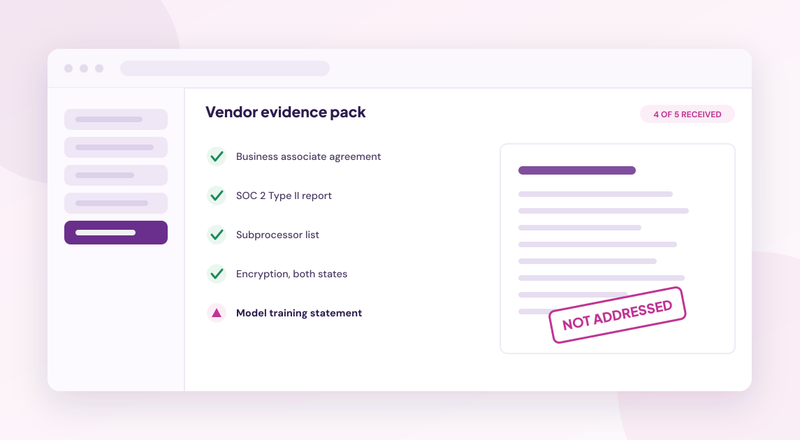
How to Vet a Healthcare AI Vendor: BAA, Trust Center and Audit Trail
Zain QayyumTue, Sep 15, 2026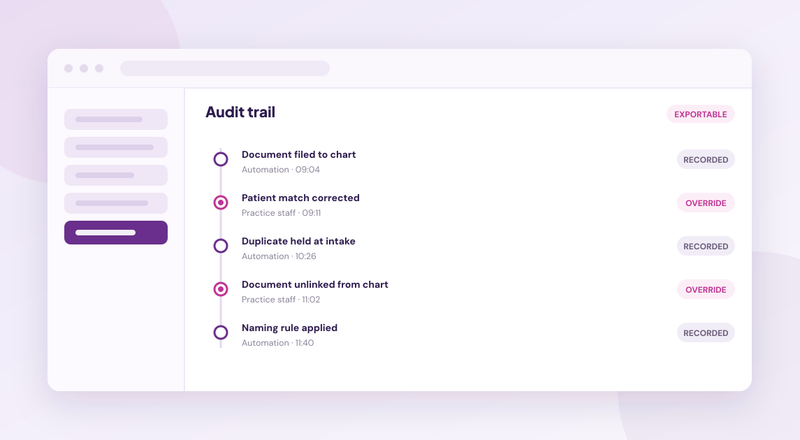
How to Verify and Override What Healthcare AI Does to a Patient Chart
Zain QayyumTue, Sep 8, 2026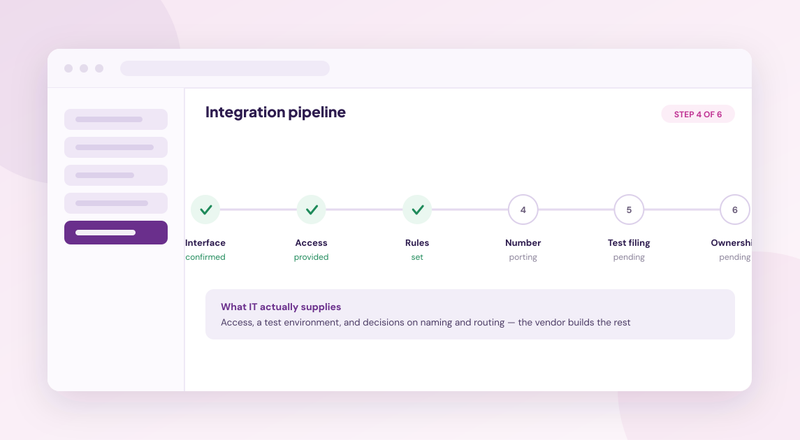
Connecting Fax and Referral Software to Your EHR: What IT Actually Has to Do
Zain QayyumWed, Aug 26, 2026