
What an AI Receptionist Can and Cannot Do for a Medical Practice
 Zain QayyumLast Updated: Sep 29, 2026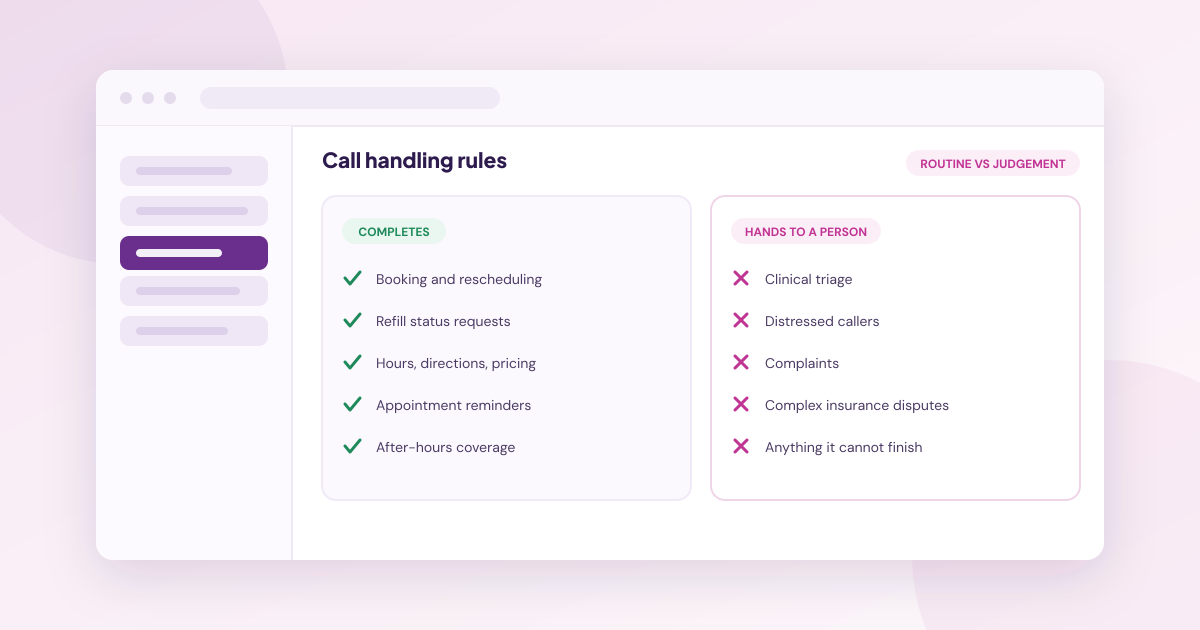
TL;DR
- An AI receptionist finishes routine calls and hands the rest to staff with context.
- Zara Medical reports 70% of calls handled without human intervention after implementing one, having previously missed around 60%.
- It should not perform clinical triage or give medical advice, whatever the demo shows.
- Booking into the chart depends on what your electronic health record (EHR) supports.
- Coverage is 24/7, which is the part a single hire cannot match.
- Judge it on what happens to the call it cannot finish, not on the calls it can.
An AI receptionist answers a medical practice's inbound calls, completes routine requests such as booking, refill status and directions, and transfers anything else to staff with a summary. What it should not do is clinical judgement, and what it cannot always do is write into every EHR.
What an AI Receptionist Can Do
The capability set is narrower than the marketing and broader than most practices expect. Four categories cover almost all of it.
Answer Every Call, Including the Ones You Currently Miss
Coverage is the clearest advantage. Medsender's voice agent MAIRA answers around the clock, which is a different proposition from extending a shift.
The gap this closes is usually larger than practices estimate. Zara Medical reported missing around 60% of incoming calls before automating, which is a figure most front desks would dispute about themselves until they measured it.
Complete Routine Requests Rather Than Take a Message
Completing the request is the distinction from an answering service. Per Medsender's voice product page, MAIRA answers questions on hours, directions and pricing, captures refill requests and handles appointment inquiries, and places outbound calls for patient recapture and referrals.
A message that arrives as a callback list has moved work to tomorrow morning. A completed booking has removed it. Ask any vendor which of the two its product actually produces, because the demo rarely distinguishes them.
Put the Result Where Staff Will Find It
The page states that the agent syncs with the EHR and that "call details and patient messages land on the right chart automatically." Every call is retained with a transcript and summary rather than as an audio file somebody has to listen through.
Hand Over Cleanly When It Should
Escalation is a capability, not a failure mode. Medsender states that "anything it can't resolve is handed to your team as a task or a transfer, with a summary saved in the voice inbox", and that calls needing a live conversation are transferred right away.
What an AI Receptionist Cannot Do
Four limits, and a vendor who disputes any of them is worth more scrutiny rather than less.
Clinical Triage or Medical Advice
Deciding whether a symptom needs an appointment today, tomorrow or an emergency department is a clinical judgement. It stays with clinical staff regardless of how capably a system handles the surrounding conversation.
Ask how the system recognises a call that has become clinical mid-conversation, and what it does at that moment. The right answer is an immediate transfer, not a best attempt.
Guarantee It Can Write Into Your EHR
Booking into the schedule and collecting a booking request are different outcomes, and which one you get depends on your system. Medsender states the condition plainly for its document workflow: "If your EHR supports chart creation and write-back, both happen automatically."
Confirm the behaviour for your own EHR by name before a pilot. A platform naming your system is a stronger signal than a platform quoting a total.
Handle the Caller Who Needs a Person
A distressed caller, a complaint, a bereavement, a complex insurance dispute. These are not edge cases to be engineered away; they are the calls where a practice's reputation is made, and they belong with staff.
Carry Your Compliance Obligation
An AI receptionist processing patient information is a business associate under the Health Insurance Portability and Accountability Act (HIPAA) and needs a signed business associate agreement (BAA). The vendor's technical sophistication does not substitute for that contract.
What to Measure in a Pilot
Three numbers, over at least a month. The share of calls the system finishes without staff involvement, the share it transfers, and what happens to the transferred ones.
Zara Medical reports 70% of calls automated without human intervention, more than 20 hours a week saved across calls and documents, and communication costs down 75%. Treat published figures as a benchmark to test against your own mix, not as a forecast, because call composition varies enormously between specialties.
Deciding Whether Your Phone Suits One
An AI receptionist works well on a phone line with a particular shape, and badly on one without it. Establishing which you have costs nothing and saves a pilot.
- It suits a line carrying volumes of the same few calls, hours, directions, booking, refill requests, where the caller wants a fact or a slot and nothing else.
- It suits after-hours and overflow, where the alternative is voicemail rather than a person, because the comparison there is favourable almost regardless of quality.
- It does not suit a line where most calls are clinical questions, distress, or complicated insurance disputes, since those transfer, and a system that transfers most of what it answers has added a step.
Two things stand out about how these products are sold. The capability claims are consistently stronger than the handoff descriptions, and handoff is the part your patients will actually experience when it matters. And the published automation rates come from practices whose call mix is rarely stated, which makes them a benchmark to test rather than a number to plan around.
Listen to a day of calls before shortlisting anything, and sort them into the ones a well-briefed new hire could finish alone and the ones they could not. That ratio is the honest ceiling on what an AI receptionist will do for your practice.
FAQs
What Can an AI Receptionist Actually Do?
Answer inbound calls around the clock, complete routine requests such as booking, refill status and directions, place outbound recapture calls, and log each call to the chart with a transcript and summary. Medsender's MAIRA answers around the clock and transfers anything it cannot resolve.
Can an AI Receptionist Do Clinical Triage?
No, and it should not attempt it. Deciding urgency is a clinical judgement that belongs with clinical staff. Ask any vendor how the system detects a call turning clinical and what it does at that point. An immediate transfer is the correct behaviour, not a best attempt at an answer.
Will It Book Directly Into Our EHR?
Sometimes, depending on your system. Booking into the schedule differs from collecting a request for staff to enter. Medsender states that where an EHR supports chart creation and write-back, both happen automatically. Confirm the behaviour for your own EHR by name instead of accepting a general answer.
What Share of Calls Can It Handle Alone?
Zara Medical reports 70% handled without human intervention after implementing MAIRA, having previously missed around 60% of incoming calls. Your own share depends on call mix, so treat published figures as a benchmark to test in a pilot, not as a forecast for your specialty.
Is an AI Receptionist Better Than an Answering Service?
An AI receptionist and an answering service do different jobs. An answering service takes a message that somebody actions tomorrow; an AI receptionist completes the request and records it. Both are business associates under HIPAA and both need a signed BAA. Compare them on completed tasks, not on calls answered.
What Happens to Calls It Cannot Finish?
With Medsender, unresolved calls become a task or a transfer with a summary saved in the voice inbox, and calls needing a live conversation transfer immediately. This is the behaviour worth testing hardest in a pilot, because it determines what your staff actually inherit each morning.

Zain Qayyum
Chief Executive Officer
Zain Qayyum is co-founder and co-CEO of Medsender. He started the company in 2015 and has spent the decade since on the front-office work that decides whether a referred patient is ever seen: inbound fax, referral backlogs, and phones nobody has time to answer. He argues that healthcare's hardest problems are operational rather than technical, and speaks and writes on where AI genuinely helps a practice and where it overpromises. He is based in New York.
Related Signals
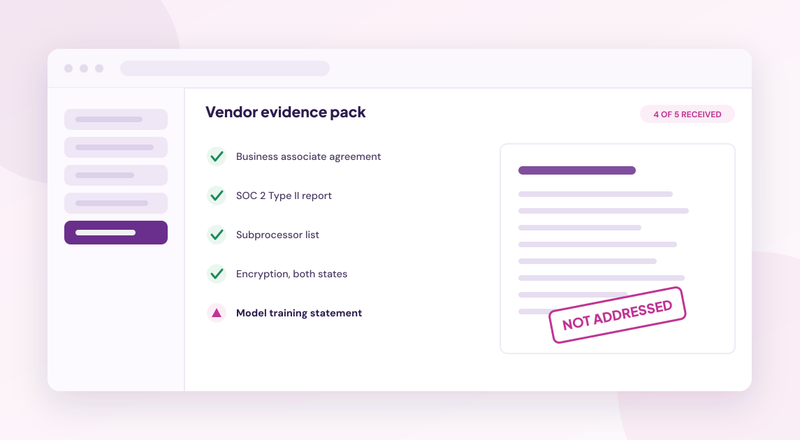
How to Vet a Healthcare AI Vendor: BAA, Trust Center and Audit Trail
Zain QayyumTue, Sep 15, 2026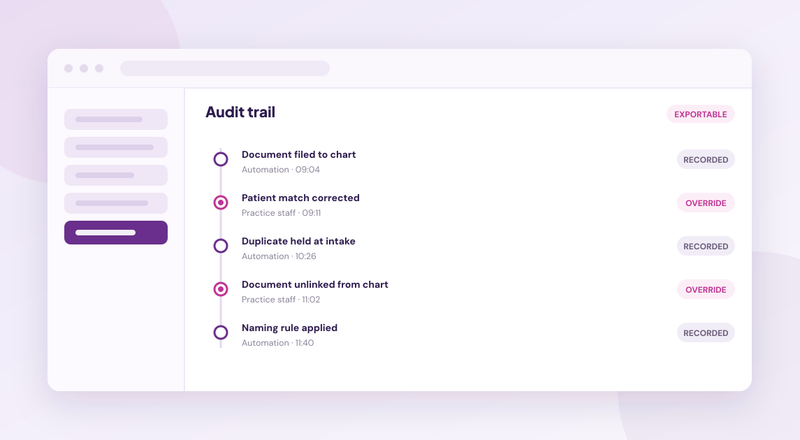
How to Verify and Override What Healthcare AI Does to a Patient Chart
Zain QayyumTue, Sep 8, 2026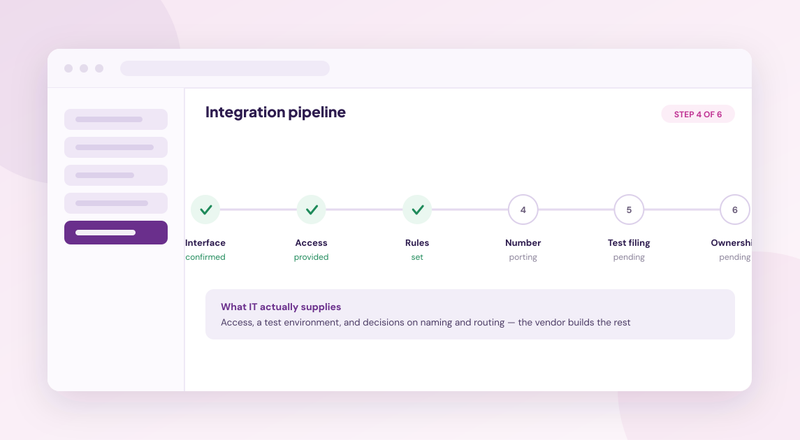
Connecting Fax and Referral Software to Your EHR: What IT Actually Has to Do
Zain QayyumWed, Aug 26, 2026