
Tennr and ReferralMD Compared With Medsender
 Zain QayyumLast Updated: Nov 23, 2026
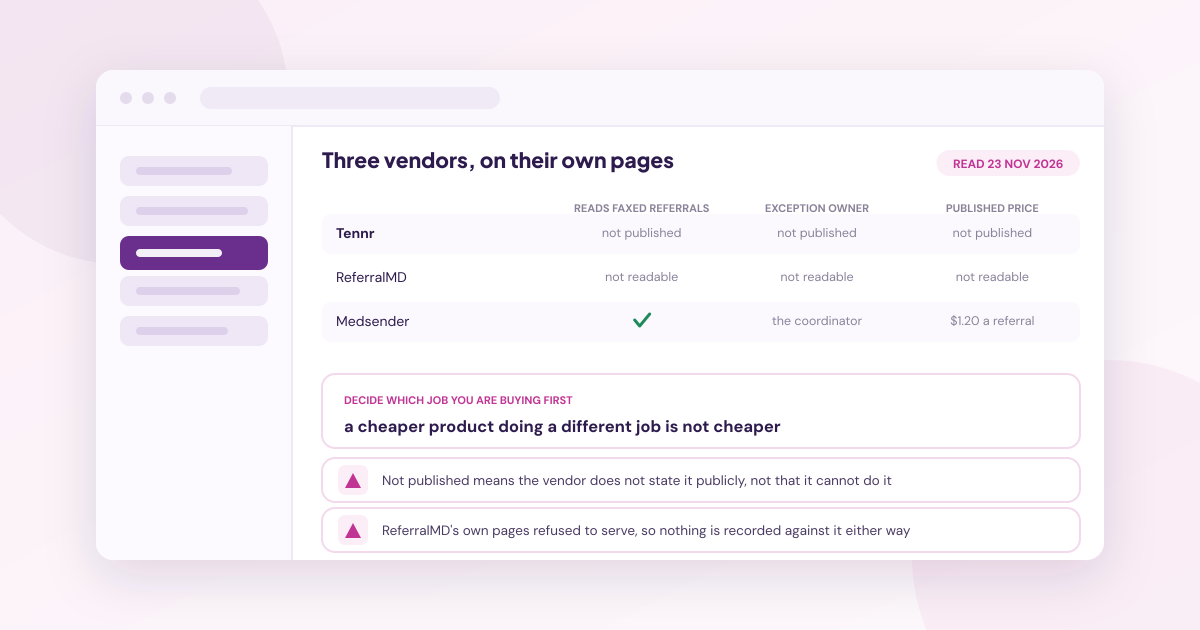
Tennr and ReferralMD Compared With MedsenderMedsender, Tennr and ReferralMD are bought for three different jobs rather than sold as three versions of one product. One reads the faxed referral so nobody retypes it. One tracks referrals across a network. One runs intake at scale inside named verticals.
Eight vendors appear below with Medsender first as the publisher of this page, which is a listing rule rather than a ranking. Every vendor fact was read on that vendor's own site, on 12 November 2026 or re-checked on 23 November 2026. Each is scored on the same six criteria, including what reaches the electronic health record (EHR).
TL;DR
- Decide which job you are buying before comparing prices, because a cheaper product doing a different job is not cheaper.
- The first criterion is whether faxed referrals are read at all, or only documents a person uploads by hand.
- The second criterion is where a referral goes when it needs a judgment, and whether a named person owns it.
- Chart creation and write-back happen if your EHR supports them, so get that answer for your own EHR by name.
- Most of this category publishes no price, which narrows a shortlist faster than any feature comparison does.
- Where a vendor publishes nothing on a criterion, record "not published" rather than guessing, and get the answer in writing.
Why Medsender, Tennr and ReferralMD Get Compared
Medsender, Tennr and ReferralMD land on the same shortlist because all three sit near the word referral, and the word covers at least three separate jobs. A practice retyping faxed referrals and a network standardising how referrals move are not buying the same thing.
Three Products, Three Jobs
Three jobs account for most of the confusion in this category.
- Reading the faxed referral so nobody retypes it into the chart
- Tracking a referral as it moves across a network of separate organisations
- Running referral intake at scale inside a named vertical such as infusion or durable medical equipment
Why Price Comparison Comes Last
Price is the wrong opening question when the products do different work, because the cheaper option may not do your job at any price. It also narrows the field quickly once the job is settled. Two of the eight published a price that could be read on 12 November 2026, and a third publishes prices on a page that refused an automated read.
The Comparison Table
Six criteria applied identically to all eight vendors, with the chart column carrying its condition in the header. Cells read "not published" where the vendor states nothing publicly, which is different from a capability being absent. Cells read "not read" where the vendor's own site returned nothing readable.
| Vendor | Job it is bought for | Reads faxed referrals | Exception handling | Patient outreach channels | Chart Write-Back (If Your EHR Supports) | Published price |
|---|---|---|---|---|---|---|
| Medsender | reading the faxed referral | yes | flagged for the coordinator | text, email, self-booking link | 34 named EHRs, where supported | $1.20 per referral |
| Assort Health | phone call handling | not published | not published | calls, two-way texting | athenahealth named only | not published |
| LeadingReach | referral coordination network | not read | not read | not read | not read | published, page not readable |
| Linear Health | athenahealth-native coordination | yes, referral faxes | exceptions escalated | patient contact, booking | athenahealth, where supported | from $2,000 a month |
| Plena Health | not read | not read | not read | not read | not read | not read |
| ReferralMD | referral management network | not read | not read | not read | not read | not read |
| Tennr | named verticals at scale | not published | not published | not published | none named | not published |
| Valerie Health | referral and document automation | not published | not published | not published | no EHRs named | not published |
The Six Criteria, Applied to Every Vendor
Six criteria run through the table and the entries, and Medsender is scored on exactly the same terms as everybody else. Each is a question you can put in an email and get a written answer to.
What Arrives and What Gets Read
Faxed referrals, uploaded documents, portal messages, or some subset of the three. Optical character recognition (OCR) across typed and handwritten pages is the capability to verify rather than assume. Medsender reads a fax batch in under 5 seconds, and its published 99% accuracy figure covers fax extraction only.
Where a Referral Goes When It Needs a Judgment
Medsender flags anything unusual as an exception for the coordinator, and judgment calls stay with the team. The software knows a referral from a result from an authorization, which makes the flag meaningful rather than a catch-all queue. Put the same question to every vendor.
What Reaches the Patient
Medsender outreach is text and email carrying a self-booking link, so the patient picks the slot. Call automation also schedules through that same self-booking route. Your own patient consent and opt-out policy governs who is contacted, and this page takes no position on timing.
What Happens in the EHR
Chart creation and write-back happen if your EHR supports them, and the condition carries real weight here. Medsender publishes 34 named EHR integrations and 47 on request. Past the yes or no, ask which fields arrive and what the record shows when a patient match is ambiguous.
What Each Vendor Publishes About Price
Medsender publishes referrals at $1.20 each sliding to $1.00, and fax at $0.08 per page sliding to $0.056. Patient Recapture is billed on outcomes, so you only pay for completed appointments, not activity. Linear Health publishes from $2,000 a month, read 12 November 2026. See how practice automation is priced.
What Each Vendor Publishes About Security
Medsender is compliant with the Health Insurance Portability and Accountability Act (HIPAA), and publishes a System and Organization Controls (SOC) 2 Type II report through the Trust Center on request, where controls are tested continuously by an independent auditor. A business associate agreement (BAA) is included free with every account, with 256-bit Secure Sockets Layer (SSL) in transit and 2048-bit at rest, on Google Cloud with US servers.
The Eight Vendors, Medsender First
Medsender publishes this page and is listed first, with the other seven following alphabetically by vendor name, so the sequence carries no judgment and Medsender lands fourth. Each entry gives what the vendor is, which buyer it suits, and real limitations.
Medsender
Medsender starts from the paperwork, reading a fax batch in under 5 seconds with OCR across typed and handwritten pages, and flagging anything unusual as an exception for the coordinator with judgment calls left to the team. Strengths are faxed referral intake, exception routing with a named owner, 34 named EHR integrations and 47 on request, a business associate agreement free with every account, and per-unit pricing quotable before a sales call. It suits a specialty practice whose coordinator is retyping faxed referrals. Limitations are stated as limitations. Not every system supports the filing step, because chart creation and write-back happen if your EHR supports them. Medsender does not claim insurance verification as generally available, and does not claim prior authorization as shipped. Microsoft SSO is the only single sign-on supported, human support runs 9AM to 5PM EST, and no contractual uptime commitment is published. It fits network-wide tracking and on-premise buyers poorly.
Assort Health
Assort Health is voice-first and deep on that axis, covering inbound call answering, scheduling, intake, medication refills, lab requests, waitlist management, payment resolution, outbound outreach and two-way texting, read 12 November 2026. It added referral automation in August 2026. It suits a practice losing patients at the phone rather than at the fax inbox. Limitations for an outside evaluation are about disclosure: no published pricing, no stated human review step, no description of what happens when the software cannot resolve a request, and athenahealth the single platform named among a claimed fifteen or more. Its trust centre is not a status page with incident history.
LeadingReach
LeadingReach sells into referral coordination and publishes prices, which puts it in a small group within this set. Its own site refused automated reads on 12 November 2026 and again on 23 November 2026, so no figure from it appears here and none should be quoted second-hand. It serves coordination between organisations that both sit on the same network. Its limitation for this comparison is practical rather than commercial, because none of faxed referral intake, exception ownership, outreach channels or the EHR connection could be verified on the vendor's own pages. Open its pricing and product pages directly, and date what you find.
Linear Health
Linear Health publishes both its commercial terms and its escalation model, read 12 November 2026. It starts from $2,000 a month as a flat fee per workflow sized to volume, and states that nothing is charged monthly until the workflow is live and processing real work. It converts referral faxes into structured records, runs eligibility checks, contacts patients and books appointments, with authorization handling and care gap closure as separate modules. Its stated posture is routine work automated and exceptions escalated, at up to 80% of coordination work automated. It suits an athenahealth practice that wants terms in public. Its limitation is that it never defines what triggers an escalation, and it states native write-back on athenahealth, where chart creation and write-back happen if your EHR supports them.
Plena Health
Plena Health sits in the verified competitor set, and its own website returned no readable content when read on 12 November 2026 and again on 23 November 2026, where plenahealth.com rendered only a tracking image and a privacy link. Nothing about its scope, document handling, pricing or security posture can be sourced from the vendor, so every cell in its row reads "not read" rather than "not published". Its intended buyer cannot be established from public material. A practice that wants it shortlisted should request the security pack, a customer reference in its own specialty and a written answer on all six criteria before any demo.
ReferralMD
ReferralMD describes itself on referralmd.com, read 23 November 2026, as referral management and a healthcare referral network, and that pairing is the positioning. A network product answers a different question from practice-level intake, because its value sits in the handoff between organisations rather than in what happens to a document arriving at one practice. Its other pages refused automated reads on 23 November 2026, so faxed referral intake, exception ownership, outreach channels, the EHR connection and price are unverified here. It serves organisations standardising how referrals move when all of them sit on one platform. Our roundup of ReferralMD alternatives works the same criteria across a wider set.
Tennr
Tennr states its target segments explicitly, naming fertility clinics, hospitals and health systems, infusion providers, manufacturers and durable medical equipment suppliers, physician groups and specialty pharmacies, read 12 November 2026. Its customer logos match that shape, and a $101M Series C means durability is not the question. It belongs with an organisation that has its own technology function and volume inside one of those segments. Its limitation for a smaller practice is that almost nothing is published: no pricing, no stated review posture, no named EHR integrations and no security claims on its public pages. For a four-person front office with no project owner that is a segment mismatch, not a weak product. See Tennr alternatives.
Valerie Health
Valerie Health sells Referral Automation, Fax and Document Automation, Automated Scheduling and Growth Analytics, named exactly that way, read 12 November 2026. It suits a practice wanting a second quote against an identical-sounding product set, which makes it an obvious like-for-like to put beside Medsender. Two disclosure gaps cap an outside evaluation. Valerie Health names no EHR or practice management integrations at all, saying only that it works with your systems, which matters for software whose value depends on reaching one specific system. It publishes no pricing. Valerie Health also describes itself as certified under HIPAA, and HIPAA operates no certification scheme, so that wording is worth querying.
Which Vendor Fits Which Practice
Four decision rules cover most practices, and each starts from your situation rather than a vendor name. Stop at the first rule that describes you.
If Most Referrals Arrive by Fax
Settle one question before any other. Are faxed referrals read, or only documents a person uploads by hand. Record each vendor's answer against that single criterion and set the feature lists aside. Send a batch of your own faxes, including the handwritten pages and the crooked scans.
If You Are Standardising Across a Network
Network tracking is a different job from practice-level intake, and a practice-level product will feel thin against it. That is a fit problem rather than a quality problem. Ask how referrals are handed between separate organisations, and who owns the record at each hop.
If You Are in a Specific Vertical at Scale
Vertical-specific products exist for infusion, durable medical equipment and similar segments, and they are worth the conversation at that volume. Ask what each does with a referral that needs a judgment, because that answer varies more than the marketing does.
If Your EHR Is athenahealth or ModMed
Name your EHR in the first email and ask each vendor what its connection reaches inside that specific product. Medsender is on the ModMed Marketplace. Chart creation and write-back happen if your EHR supports them, so get that in writing rather than inferring it from a logo. See evaluating referral automation vendors.
FAQs
Questions from practices at final decision stage with two or three named vendors in front of them.
Which Software Compete With Tennr and ReferralMD?
Eight products sit in the same consideration set: Assort Health, LeadingReach, Linear Health, Medsender, Plena Health, ReferralMD, Tennr and Valerie Health. They split across three jobs rather than competing head-on, which is why a shortlist built from names alone tends to mix products that cannot be compared.
How Does Medsender Compare With ReferralMD?
Medsender is bought for reading the faxed referral at a single practice. ReferralMD positions itself as referral management and a healthcare referral network, read on its own site on 23 November 2026. A network product and a document-intake product answer different questions, so decide which problem you have first.
How Does Medsender Compare With Tennr?
Segment is the difference. Tennr names fertility clinics, hospitals, infusion providers, equipment suppliers, physician groups and specialty pharmacies as its targets, and publishes no price, no review posture and no named EHR integrations. Medsender publishes per-unit rates, 34 named EHR integrations and an exception route with the coordinator in charge.
How Does Medsender Compare With Linear Health?
Both publish terms, which is unusual here. Linear Health states from $2,000 a month per workflow and is athenahealth-native, with up to 80% of coordination work automated. Medsender charges per unit, at $1.20 per referral sliding to $1.00. Pick on your EHR and on whether you want flat or per-unit billing.
Which Referral Vendors Read Faxed Referrals?
Two vendors in this set state it plainly. Medsender reads faxed referrals, and Linear Health converts referral faxes into structured records, both read 12 November 2026. Assort Health, Tennr and Valerie Health publish nothing about fax intake, and the sites of LeadingReach, Plena Health and ReferralMD returned nothing readable on that question.
Which Referral Vendors Publish Their Pricing?
Two of the eight published a readable price when checked on 12 November 2026. Linear Health states from $2,000 a month per workflow, and Medsender states $1.20 per referral sliding to $1.00 with fax at $0.08 per page sliding to $0.056. LeadingReach publishes prices on a page that refused automated reads.
Does Referral Software Write Back to the Patient Chart?
Sometimes, and the condition matters as much as the answer. Chart creation and write-back happen if your EHR supports them, and some EHRs do not. Medsender names 34 integrations with 47 more on request. Put the question to the vendor naming your own system, and keep the reply in writing.

Zain Qayyum
Co-Founder and Co-CEO
Zain Qayyum is co-founder and co-CEO of Medsender. His work centres on the front-office problems that decide whether a referred patient is ever seen: inbound fax, referral backlogs, and phones nobody has time to answer. He argues that healthcare's hardest problems are operational rather than technical, and speaks and writes on where AI genuinely helps a practice and where it overpromises. He is based in New York.
Related Signals
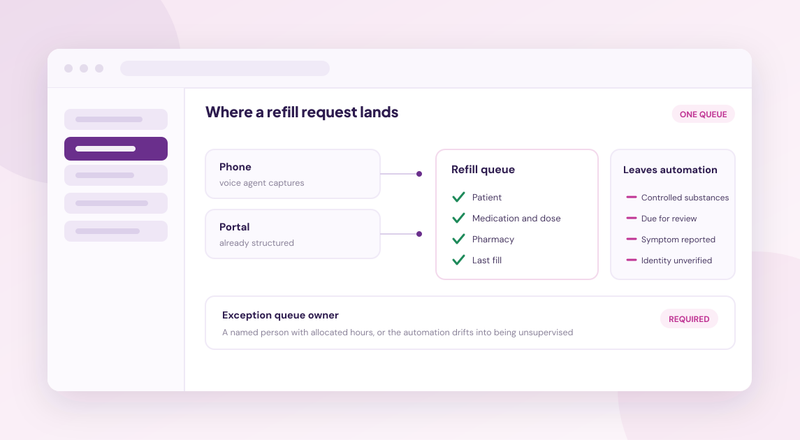
AI Voice Agent or Patient Portal: Where Refill Requests Should Land
Zain QayyumThu, Oct 1, 2026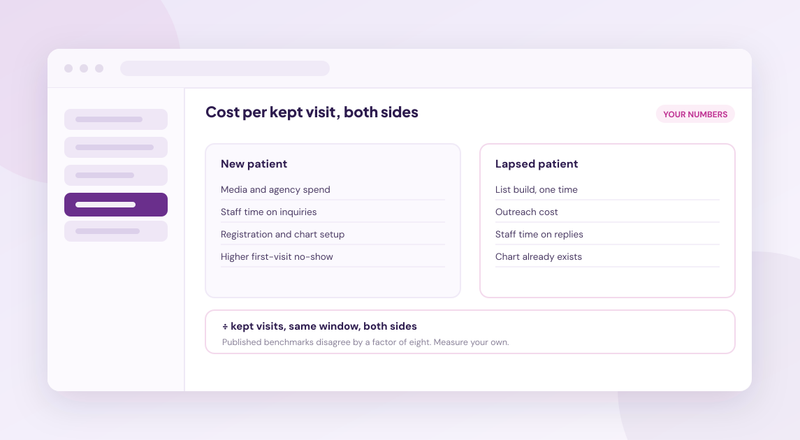
Patient Reactivation or New Patient Marketing: Which Costs Less per Visit
Zain QayyumWed, Sep 30, 2026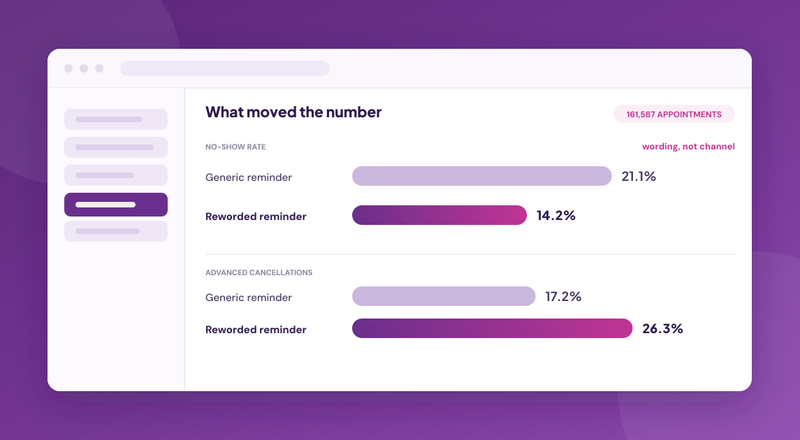
Texting or Emailing Patients to Rebook: Which Gets the Appointment
Zain QayyumTue, Sep 29, 2026